

Fundraising in 2026 has some new wrinkles thanks to the explosive interest in AI and other tech trends. As an early-stage founder, you should be aware of how the current climate might affect your raise:
AI Startups are Hot (but Scrutinised): 2024 and 2025 saw AI companies gobble up a huge share of funding – 33% of global venture funding went into AI in 2024 alone – approaching 50% in 2025. Investors are definitely interested in AI and ML-enabled startups, in both the US and UK, as they don’t want to miss the next OpenAI or DeepMind. If your startup is an AI startup, emphasise what is truly innovative about your approach, including whether you have a proprietary model? Are you using AI in a unique domain? Solving a problem others aren’t? However, expect more technical diligence now, because so many claim “we use AI,” savvy investors will ask for specifics. Show traction or accuracy metrics if you have them, or at least a compelling demo. Also be ready to address how you’ll sustain an advantage as AI tech rapidly commoditises (perhaps your data network effects, or a specialised AI model nobody else is focusing on).

If your startup is not directly an AI company, you might still get questions about “do you plan to leverage AI?” or “how will AI disruption affect your industry?”. It’s good to have thought this through. Perhaps you’ll use AI to improve efficiency (as a user, not as core product), after all, investors like hearing that you’ll be able to scale efficiently. Or reassure them that your market has defensible moats beyond what AI can automate. Essentially, show you’re not ignoring the elephant in the room.
Market Climate – Cautious but Opportunistic: Both in the UK and US, early-stage funding is still happening but investors are more selective in the mid-2020s. There’s a “two-speed” market: with many pre-seed/seed deals, but later stage is tighter. That means lots of seed investors are active, but they expect more for their money. Be prepared to show more evidence of traction or a stronger team than you might have needed in the frothy 2021 environment. The upside: if you do have a strong story, capital is there. Also, some valuations have corrected from the highs of a couple years ago – which might actually make investors more willing to deal now that things are “reasonable” again.
Use AI Tools to Your Advantage (Quietly): You have a number of AI tools that founders five years ago didn’t. You can use LLMs and other AI tools to help write portions of your business plan, generate marketing copy, even brainstorm ideas. LettsGroup's AI VentureFactory goes a lot further generating business plans, analyst reports, pitch decks, forecasts and more, tailored tightly to your business. AI financial modeling tools can help sanity-check your projections. Just remember to review and customise everything because investors will smell a generic plan a mile away. But do leverage these to save time. You can also use AI for slide design suggestions, or to simulate Q&A (ask an AI “what questions would a skeptical investor ask about my model?”, and prepare answers). Platforms like LettsGroup’s VentureFactory integrate many such tools so you’re always “investor-ready” with dynamic models and documents.
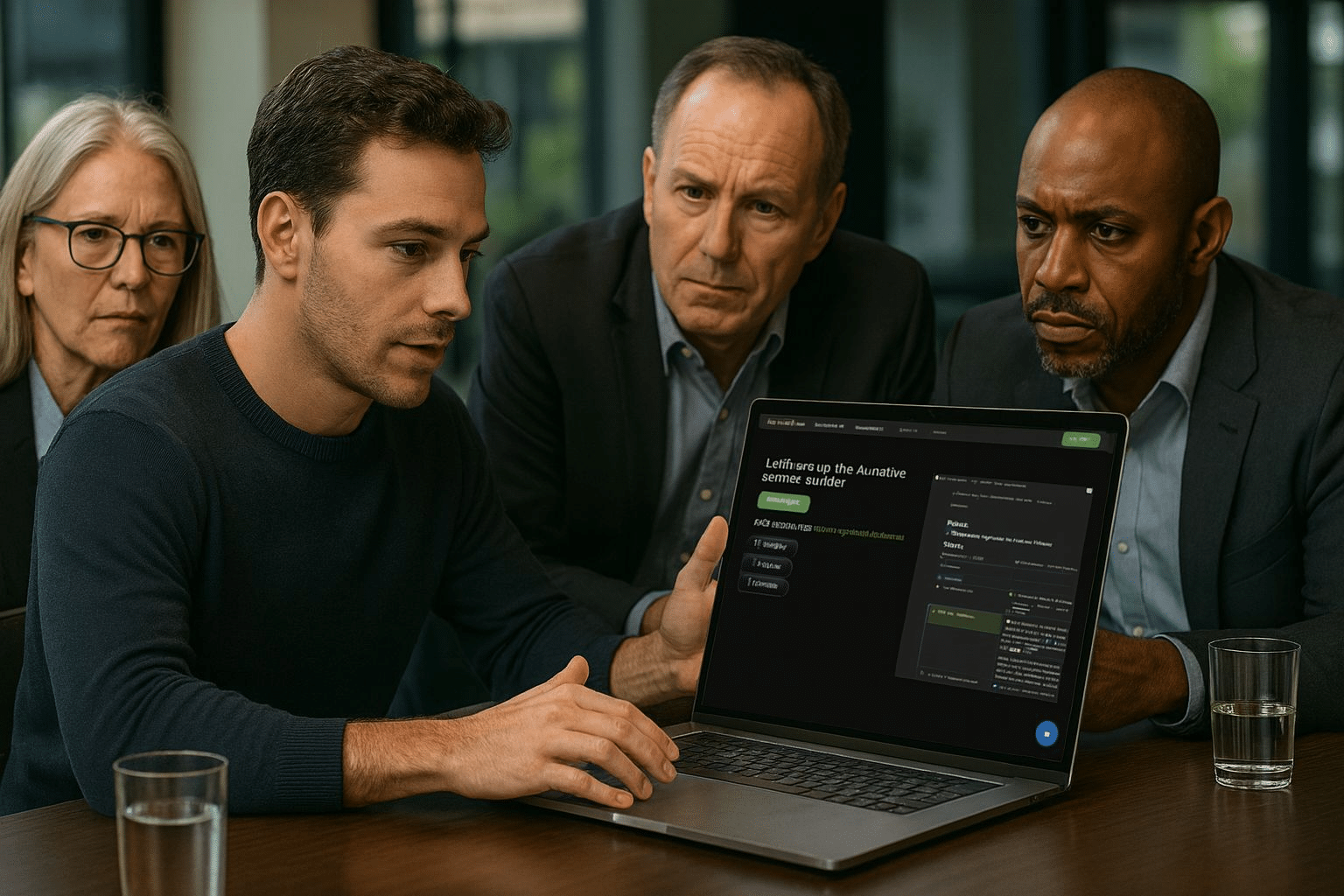
Pitching Virtually vs In-Person: Post-pandemic, many early-stage deals, especially internationally, happen largely over Zoom. Be adept at video calls: with good lighting, no disruptions, and a crisp delivery. Make sure to rehearse rigorously. That said, if you’re near an investor hub, try to meet key investors in person, it forges a stronger connection. Often, a lead seed investor will want to meet face-to-face at least once. Be willing to travel for important meetings (e.g., flying from London to San Francisco if a major US fund is interested. It's a small expense for a potentially big deal).
Grants and Non-Dilutive Funds: In the AI era, and with governments keen on tech leadership, grant funding is a viable supplement. The UK, for example, launched specific AI grant competitions and continues Innovate UK grants for innovative R&D. Winning a grant can de-risk your startup in investors’ eyes (it’s like validation and free money). Keep an eye on such opportunities, but balance effort vs reward, as grant writing can be time consuming and competitive. In the US, the SBIR (Small Business Innovation Research) grants can provide $100K–$1M+ for qualifying tech (especially deep tech). It's effectively free money if you can get it. Mention in your plan if you have or are pursuing grants, but don’t rely too much on them.
Community and Crowds: A modern approach to early fundraising is building a community around your product before asking for money. Some Web3 and open-source startups, for instance, cultivate users/developers who later become investors (via tokens or equity crowdfunding). Even if you’re not doing crowdfunding, having a user community can impress investors (demonstrates traction and loyalty). Consider doing things like a Product Hunt launch, Discord community, or social media presence that shows a following – this can indirectly aid fundraising by proving demand.
Speed vs. Patience: Founders often feel urgency to close ASAP (you want to get back to building!). But an important tip: don’t rush to take the first offer if it’s not right. In the current climate, a lot of smart money is looking for the right deals, so a bit of patience to get a better lead or term can pay off, as long as you aren’t jeopardising the company’s survival. That said, once you have momentum in a raise, do push to close efficiently – protracted fundraising can kill momentum and distract you to death. It’s a fine balance.
Be Resilient and Keep Building: Perhaps the most “AI-era” advice is: focus on building a real business, not just hype. So many AI startups raised big on hype in 2021-2022 and then faltered. Investors have become more sceptical of vaporware. Demonstrating tangible progress (prototype, users, revenue) cuts through scepticism. It proves that regardless of hype cycles, you’re executing. And ironically, the best way to fundraise is to need fundraising less. After all, if you are making progress, investors will fear missing out and approach you. Some founders now even share monthly public updates on traction (building in public); others leverage open-source contributions as proof of interest. However you do it, showing traction and velocity is the antidote to any tough fundraising environment.
In essence, use the tools and trends of the AI era to your benefit, but stick to fundamentals. A great story, a real product, a committed team, and evidence of market love will never go out of style in fundraising.
This article is Part 7 of 'The Ultimate Guide to DIY Fundraising for Early-Stage Tech, Digital and Product Startups (UK & US)'.
The smartest startups get investor-ready and raise money using LettsGroup AI VentureFactory. Sign-up today at Letts.Group.
