How to Build an MVP: What to Include, What to Leave Out, and When to Ship
13 October 2026
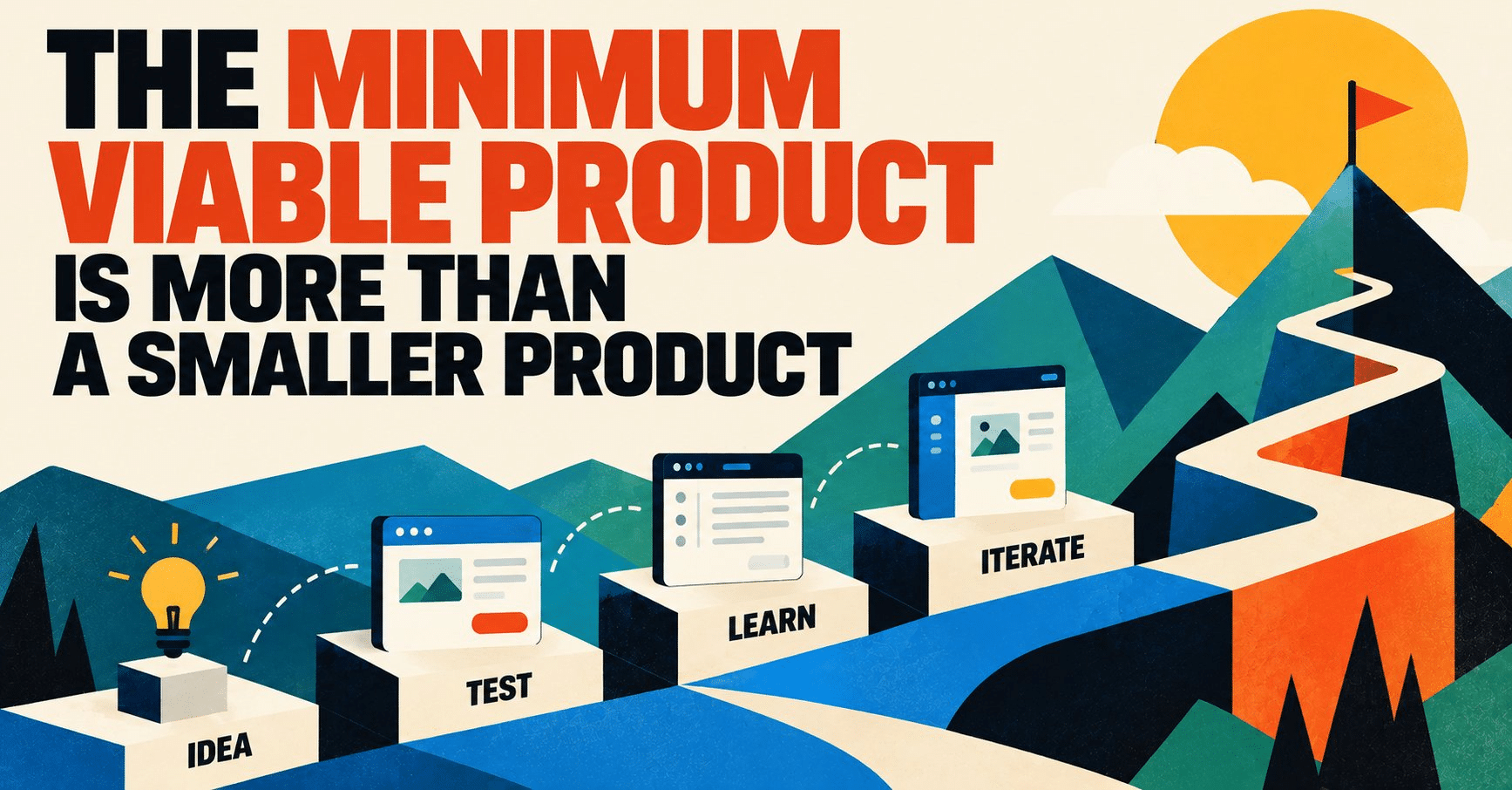
The minimum viable product is one of the most consistently misapplied ideas in the startup world. The concept is clear enough — build the smallest thing that lets you test your most important assumption — but what founders actually build under that label is often not minimum, rarely designed around a specific assumption, and shipped either far too late or on a schedule divorced from any decision the product is supposed to inform.
The result is a particular category of expensive mistake: a product that is technically an MVP in name but functions, in practice, as an unfinished version of the full product the founder wanted to build anyway. It costs more than a genuine MVP, tests less, and tends to be defended rather than learned from.
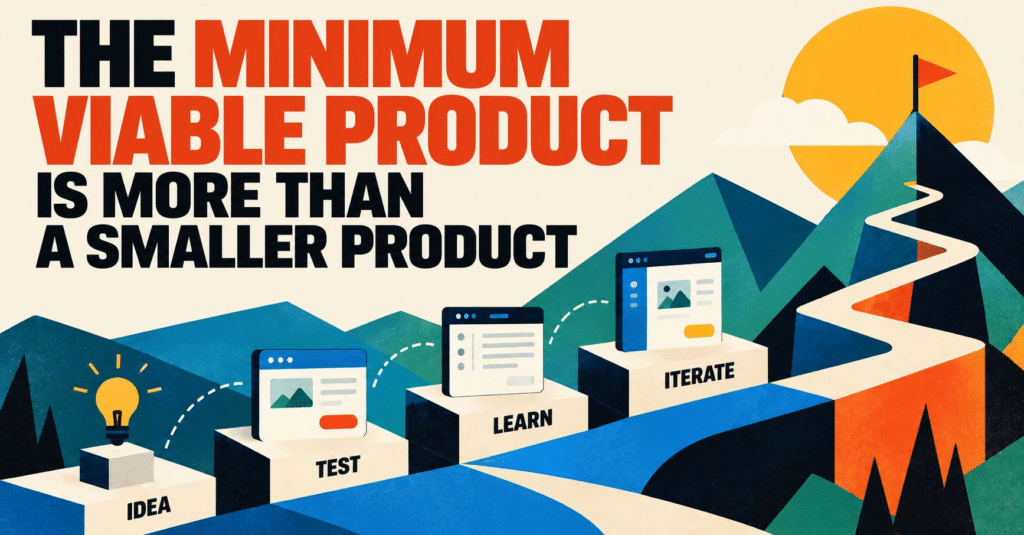
What minimum actually means
The test for whether something is genuinely an MVP is not its feature set. It is whether it is capable of answering a specific question about the market. Eric Ries defined the MVP as a version of a product that allows a team to collect the maximum amount of validated learning with the least effort. The emphasis belongs on "validated learning". It's the question the product exists to answer. Do not emphasize on "least effort," which is how the term has been popularly distorted to mean "lowest quality."
Build less. Learn more. VentureFactory helps you define an MVP around the assumptions you actually need to test. Start free.
A concierge MVP, in which the service is delivered manually before any software is built, can be an entirely legitimate approach if the question being tested is about demand rather than about the product experience. A landing page with a sign-up form is a legitimate MVP if the question is whether a specific segment of founders will take an action to express interest. A working but limited software product is the right choice when the question can only be answered through actual usage behaviour.
The choice of MVP format follows from the question, not from the founder's preferences about what to build.
What to include and what to leave out
The scoping decision that trips up most founders is the conflation of what the product needs to demonstrate with what the product needs to do eventually. These are different things, and the failure to separate them is how MVPs grow from two-week projects into six-month builds.
A useful discipline: write down every feature you are considering including, then ask of each one "which specific assumption about our customers does this test?" Features that do not map to an assumption the team is genuinely uncertain about are, by definition, not minimum viable. They may belong in a later version. They do not belong in the first one.
What almost always belongs in an MVP: the core action that delivers the primary value. A tool that manages your meeting notes should let you manage meeting notes. A platform that helps founders track assumptions should let founders track assumptions. The thing the product is fundamentally for should work.
What almost always does not belong: account management, referral mechanics, advanced reporting, integrations with tools that five per cent of users will want, and anything whose primary purpose is to make a demo look good. Each of these can be defended individually. Together they explain why most MVPs are neither minimum nor viable.
When to ship
The timing question is simpler than it is usually made to seem. The right time to ship is when the MVP can answer the question it was built to answer not when it is ready for a launch announcement, not when the founder feels ready to face the market, and not when every edge case has been handled.
Founders who wait for readiness typically wait too long. The instinct to protect a product from the market until it is good enough is understandable and usually counterproductive. The market's response to an imperfect product is more valuable than the delay required to make it less imperfect, because the market's response contains information that the founder does not currently have and cannot obtain any other way.
The exception is when shipping too early would damage a relationship the business depends on like a key enterprise customer whose experience with a buggy product will permanently affect trust, for example. In that case, the cost of early shipping is concrete and addressable, not a vague discomfort about quality.
The Innov@te connection
The Innov@te framework inside VentureFactory includes a structured product-planning stage built specifically around this scoping discipline. Rather than going directly from validated problem to full product, the framework routes founders through a stage that maps the MVP scope to the assumptions still outstanding. So what gets built is determined by what still needs to be answered, not by what the founding team wanted to build in the first place. That sounds obvious. It turns out to be genuinely uncommon.
Stop building features before you know they're needed. Use the Innov@te Framework inside VentureFactory to plan, test and develop your MVP. Start free, no credit card required.